
The original Ocarina of Time is still one of the best games ever made. It is also a 1998 game. Link could not jump unless the floor decided he should. The camera gave up in Castle Town. Time froze the second you walked into a village. Swimming was a chore. Talking to people meant reading. None of that made the adventure smaller. It just made the adventure fight you.
Nintendo’s Switch 2 remake, dated today for November 5, 2026, is still Ocarina of Time. Same dungeons, same songs, same hero’s journey. What changed is everything that used to feel like hardware. Eiji Aonuma’s gameplay walkthrough in the Zelda 40th Anniversary Direct was basically a list of those fights, one by one, getting retired.
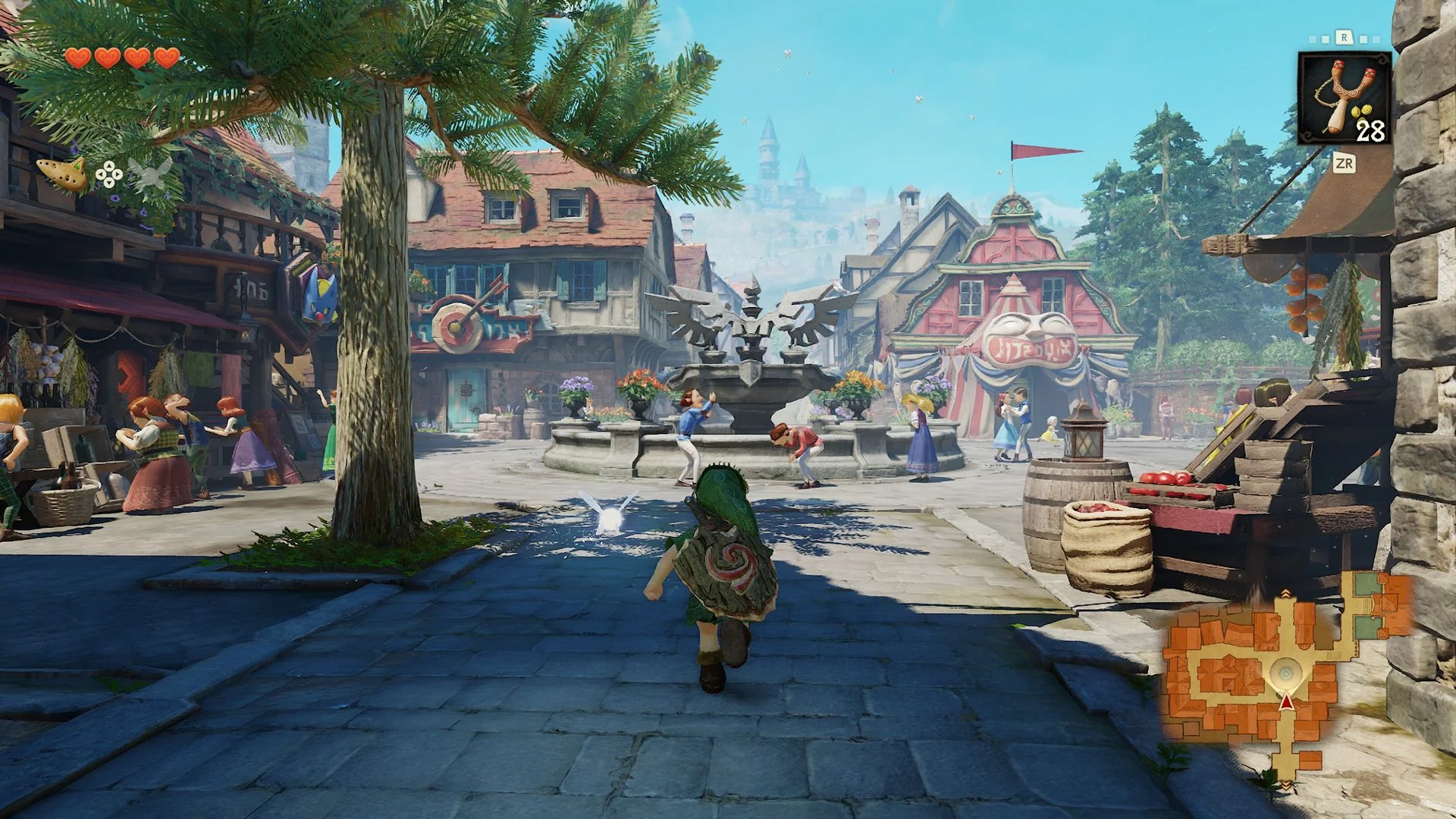
Hyrule Castle Town with a real third-person camera. The original locked this view down. Image: Nintendo
Jump and dash, on purpose
This is the headline for anyone who has actually played the N64 original. Link now has a jump button. Ledges are no longer a conversation with the collision. Gaps are something you take. Nintendo’s own rundown called it out in so many words: “Jump and run freely with newly added button commands.”
There is also a dash and roll for covering Hyrule Field. Footage from the Direct did not show a stamina meter attached to it. That is a quiet but important choice. Breath of the Wild made sprinting a resource. This remake seems to treat the dash as a quality-of-life tool for a world that was always a little too big for a child in boots. You still get Epona. You just do not have to walk quite as much before you find her.
The right analog stick finally does what every 3D Zelda after Ocarina assumed it should do. Camera control is modern. Nintendo specifically called out remodeled locations where you can move the camera freely. Castle Town is the obvious one. The market used to be a forced angle. In the new screenshots, you are behind Link, looking wherever you want, with the HUD, the mini-map, and a slingshot on ZR like a current Nintendo action game.
That Castle Town shot is also doing other work. The square is busier. Nintendo said some areas that were closed off in 1998 are open now. NPCs are actually using the space. The fountain, the bombchu bowling alley facade, the hanging produce, the kids running around the fountain: this is the same town, with the dead space filled in.
Combat still has Navi. It just moves better.
Z-targeting is still here. Navi still marks the weak point. The first dungeon boss is still Gohma, still a giant eye in a tree, still asking you to hit the eye. The difference is the body language. Link has weight. The lock-on diamonds are the same language as the original, just rendered in a game that can actually keep the camera on the thing you are fighting.
The adult-era footage went further. Phantom Ganon in the Forest Temple is a full magic duel: bow, energy blasts, a tennis-return of the boss’s own shot. The animation on Link’s swing has the extra frames the N64 never had, and the room has depth the original could only suggest.
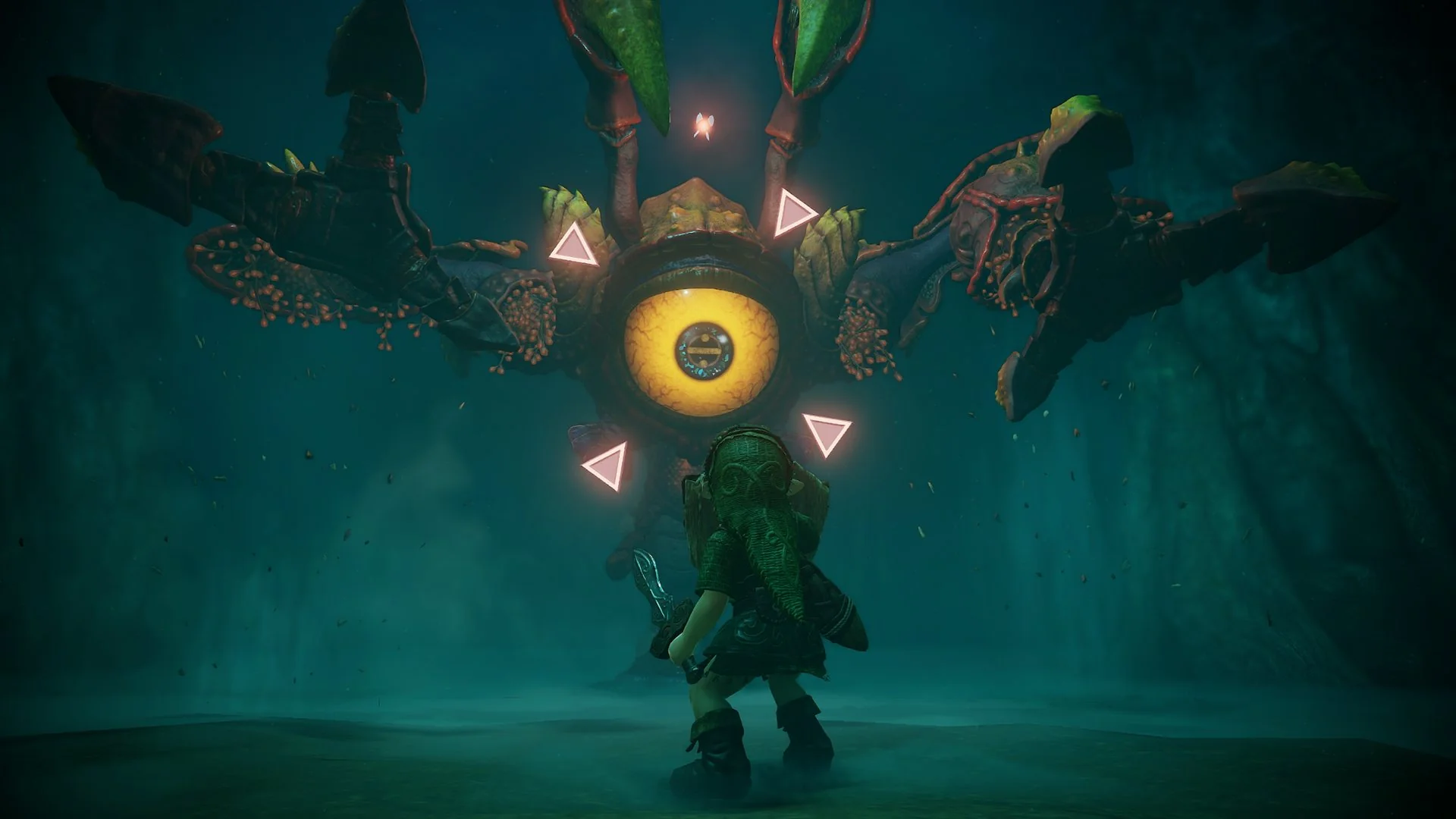
Gohma, with Navi’s targeting still doing the old job. Image: Nintendo
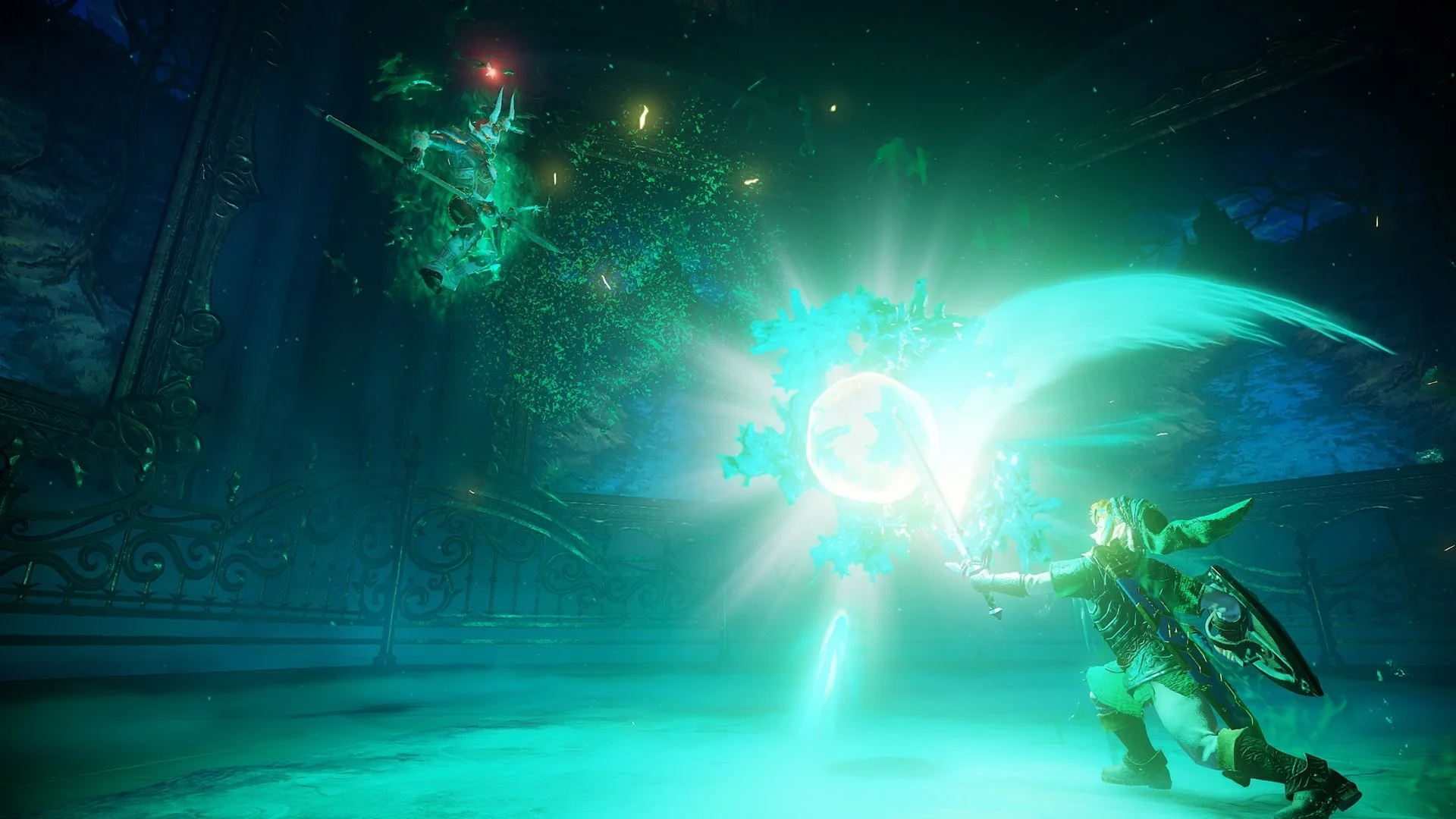
The Forest Temple fight, with the same “hit it back” puzzle and a lot more motion in the swing. Image: Nintendo
Item use is closer to the Wild-era games than to the N64 pause menu. Link still has the classic equipment screen, but Aonuma’s demo also used a shoulder-button item wheel: R to scroll, ZR to use, the same idea as Breath of the Wild. One-button item swaps in a game that used to mean pausing every time you wanted a bomb is the kind of change you feel in the first ten minutes and then never want to give back.
Water is no longer the worst part of the game
I am just going to say it. The Water Temple is the room everyone remembers for the wrong reasons. The remake cannot invent a new dungeon layout in a faithful remake, but it can stop making you hate the water.
Link now swims and dives with modern underwater movement. The screenshot from inside the temple shows him actually swimming, Navi in tow, through a space that has real caustics, real depth, and a camera that can look around instead of fighting the surface. Nintendo listed faster swimming in the Direct coverage as well. If you bounced off Ocarina because of this dungeon, this is the change that might get you back in.
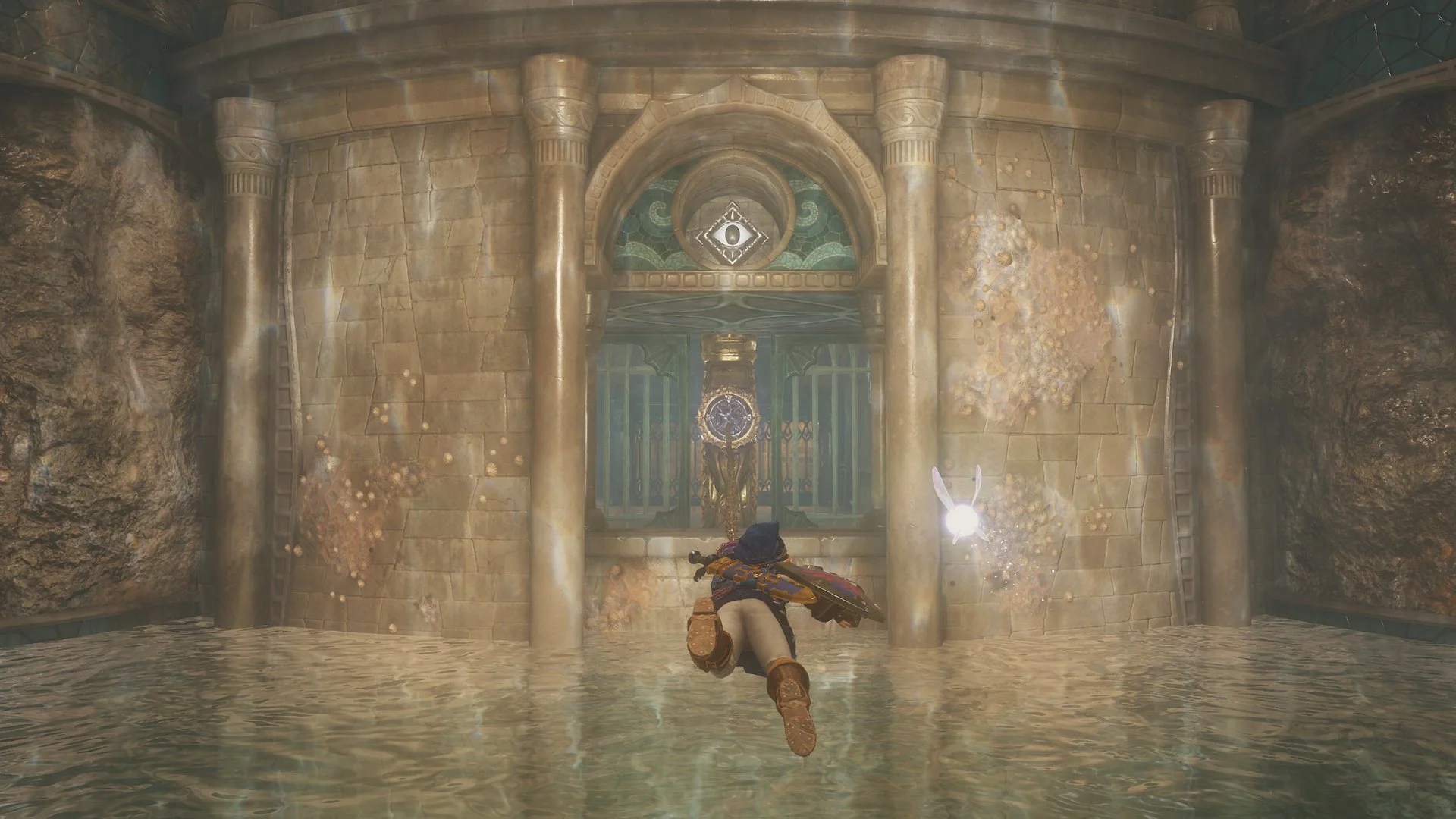
Underwater movement in the Water Temple. This is not the N64 swim. Image: Nintendo
Hyrule keeps its own clock
In the original, time stopped in towns. Walk into Castle Town at dusk and it stayed dusk until you left. The remake throws that out. The day/night cycle now continues wherever you are, including indoors and in villages. Nintendo called this out as part of a “more immersive Hyrule,” and it is one of those changes that sounds small until you live with it. Shops, NPC routines, and the feel of a place at 2 a.m. can all exist now. The original’s towns were stages. These are places that keep going when you walk in.
Cutscenes are fully voiced. Side characters have more to say. Aonuma’s demo had Saria greet Link in Kokiri Forest with extra dialogue the N64 never had. (That particular “Hi!” was not voiced in the clip that aired, but the cinematic scenes are.) Link, as tradition demands, still does not talk.
The original’s sense of “where was I?” is also getting a modern map layer. Threads of Time is a new menu that tracks story progress, lists the next objective, and slowly fills in a large tapestry as you go. It is a journal and a quest log without turning Ocarina into a checklist RPG.
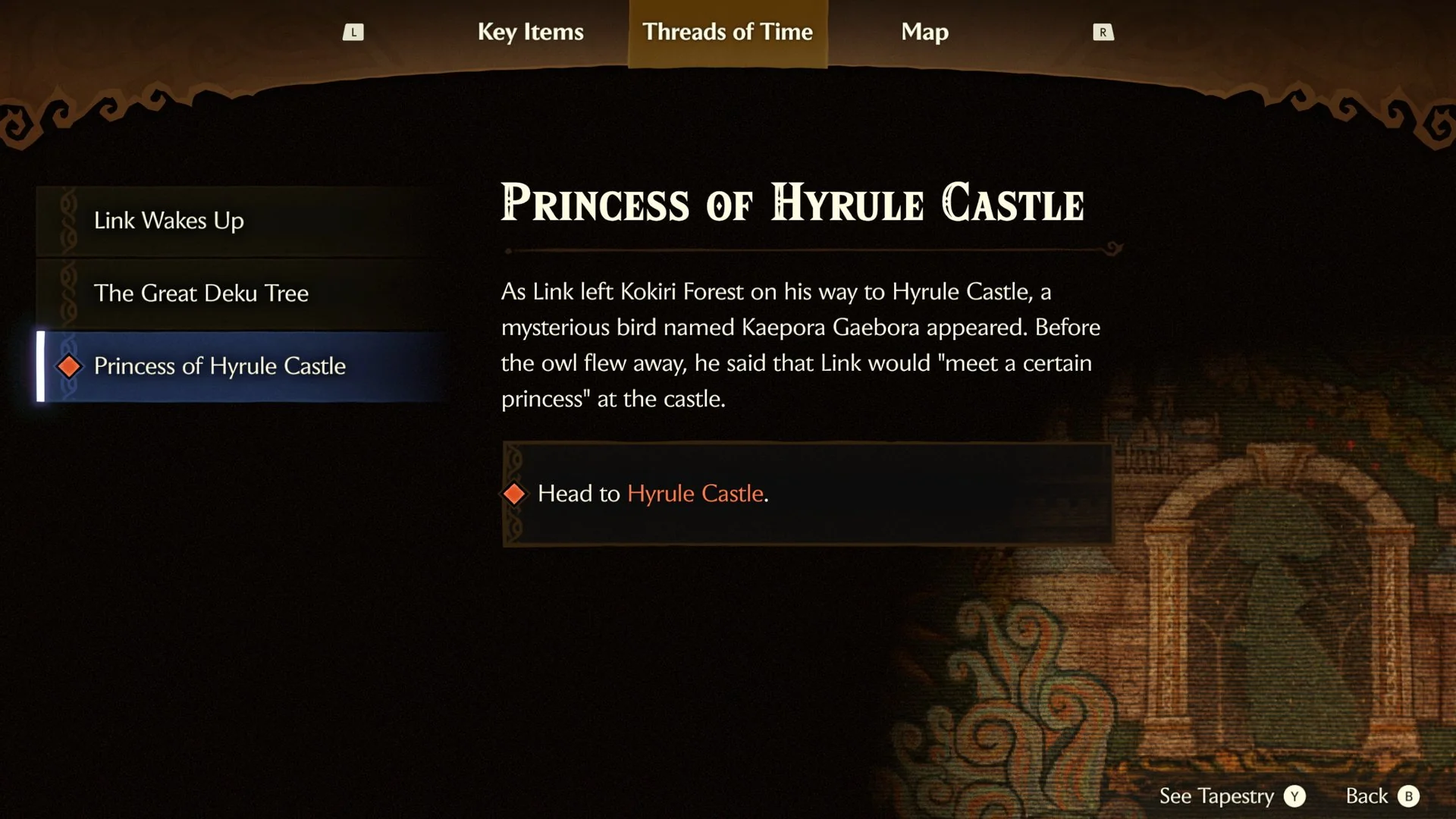
Threads of Time: story recap, next objective, and a tapestry that fills in as you play. Image: Nintendo
The ocarina is a real instrument now
Playing songs still uses the face buttons. The staff, the notes, Zelda’s Lullaby: that UI is still the UI. What Nintendo added on top is the thing only Nintendo would add.
If you hum, whistle, or play a song Link has already learned, and you are close enough to the Switch 2’s built-in microphone, Link performs it in the game. Aonuma did this live with Epona’s Song. Later this year Nintendo will sell a playable Ocarina of Time and HORI will sell an Electric Ocarina of Time that can dump out full songs with a button. Both work with the same mic feature.
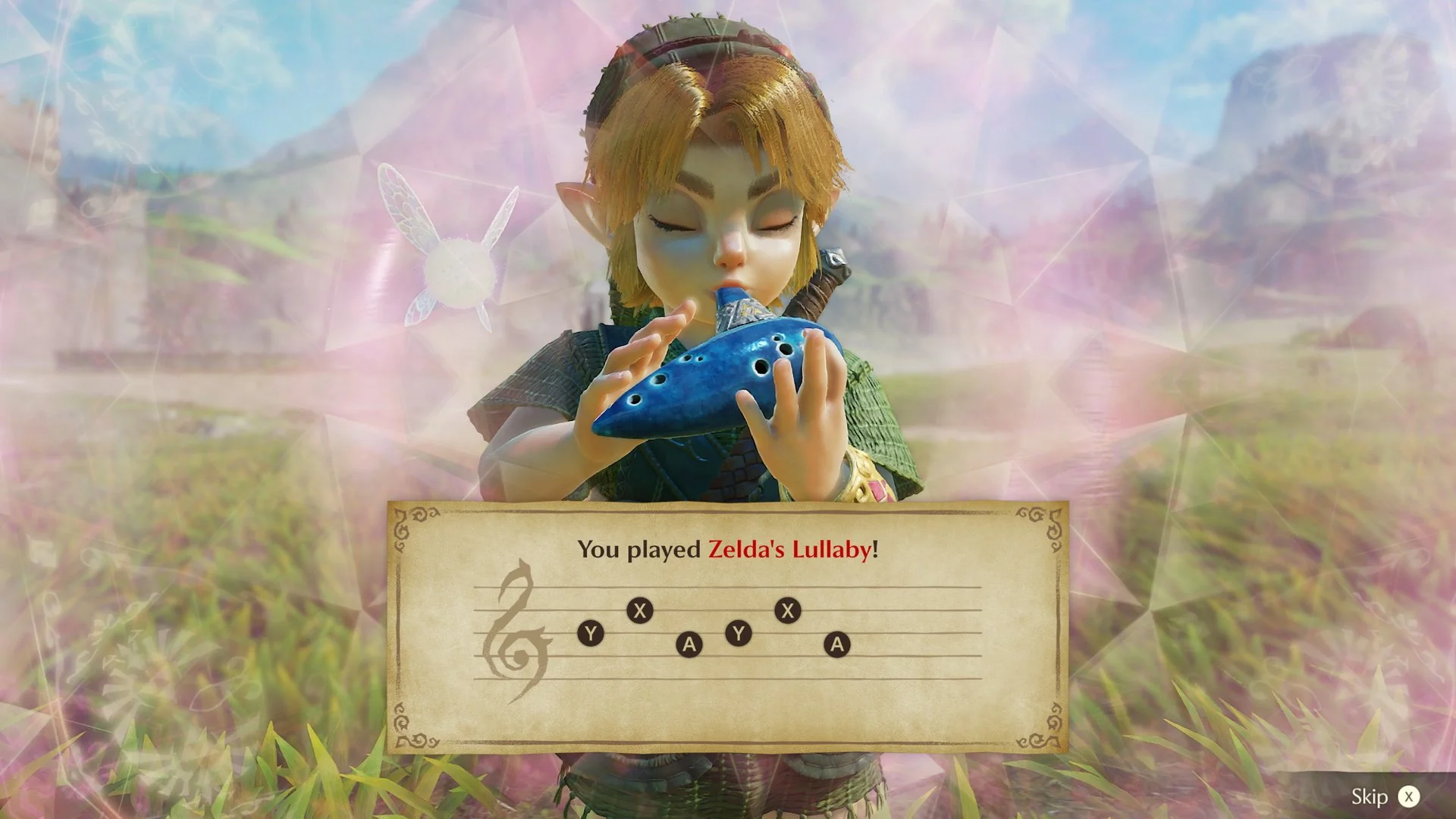
The song UI is familiar. The option to hum it into the Switch 2 mic is new. Image: Nintendo
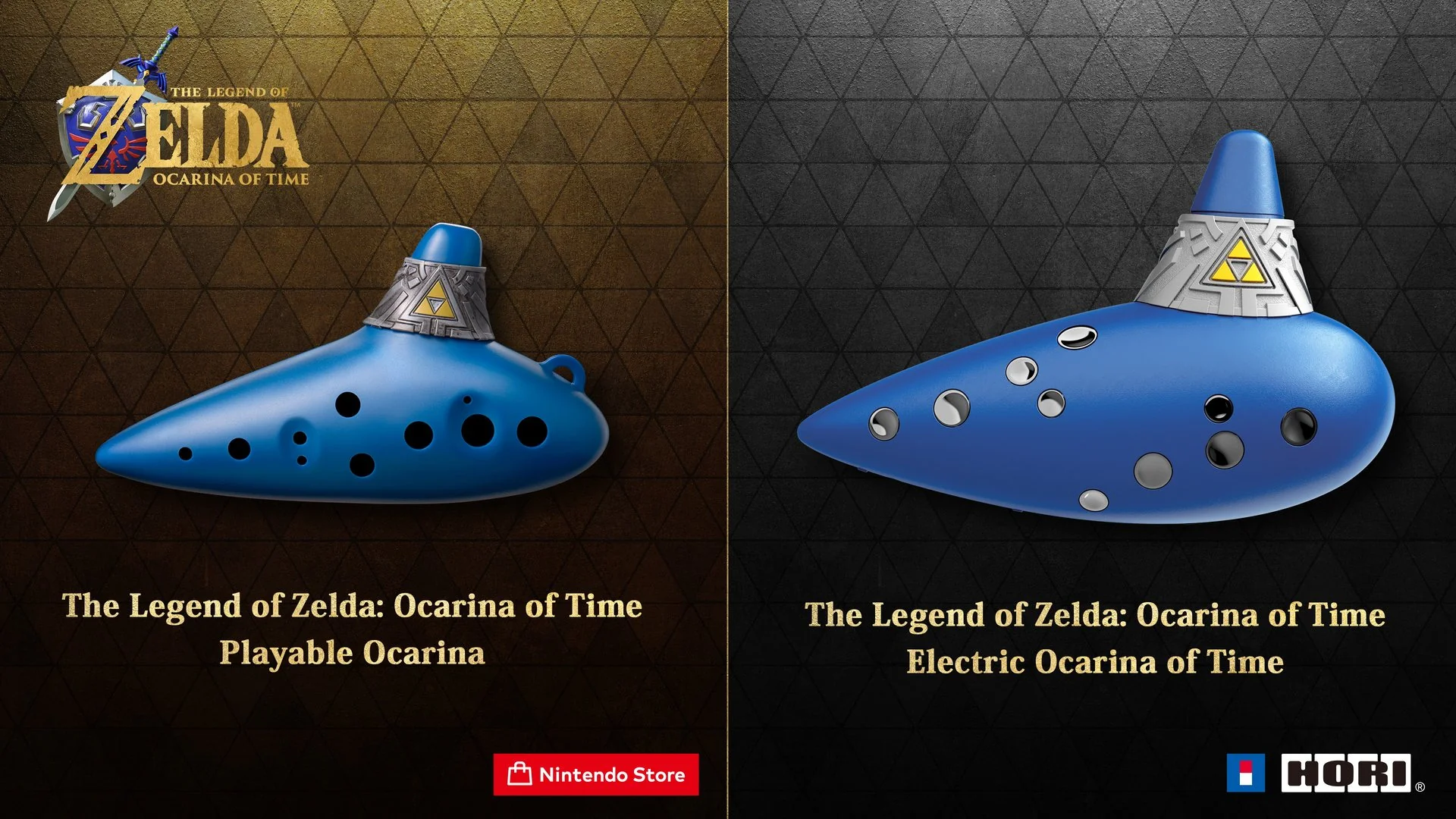
A real ocarina and HORI’s electric version, both due later this year. Image: Nintendo
You can still mash Y, X, A if you just want to play the game. The mic is an extra, not a requirement. It is also the most Ocarina of Time idea Nintendo has had in years: the instrument was always the point, and now it can actually be an instrument.
Epona, for what it is worth, looks fast enough that you will still want her even with the new dash.
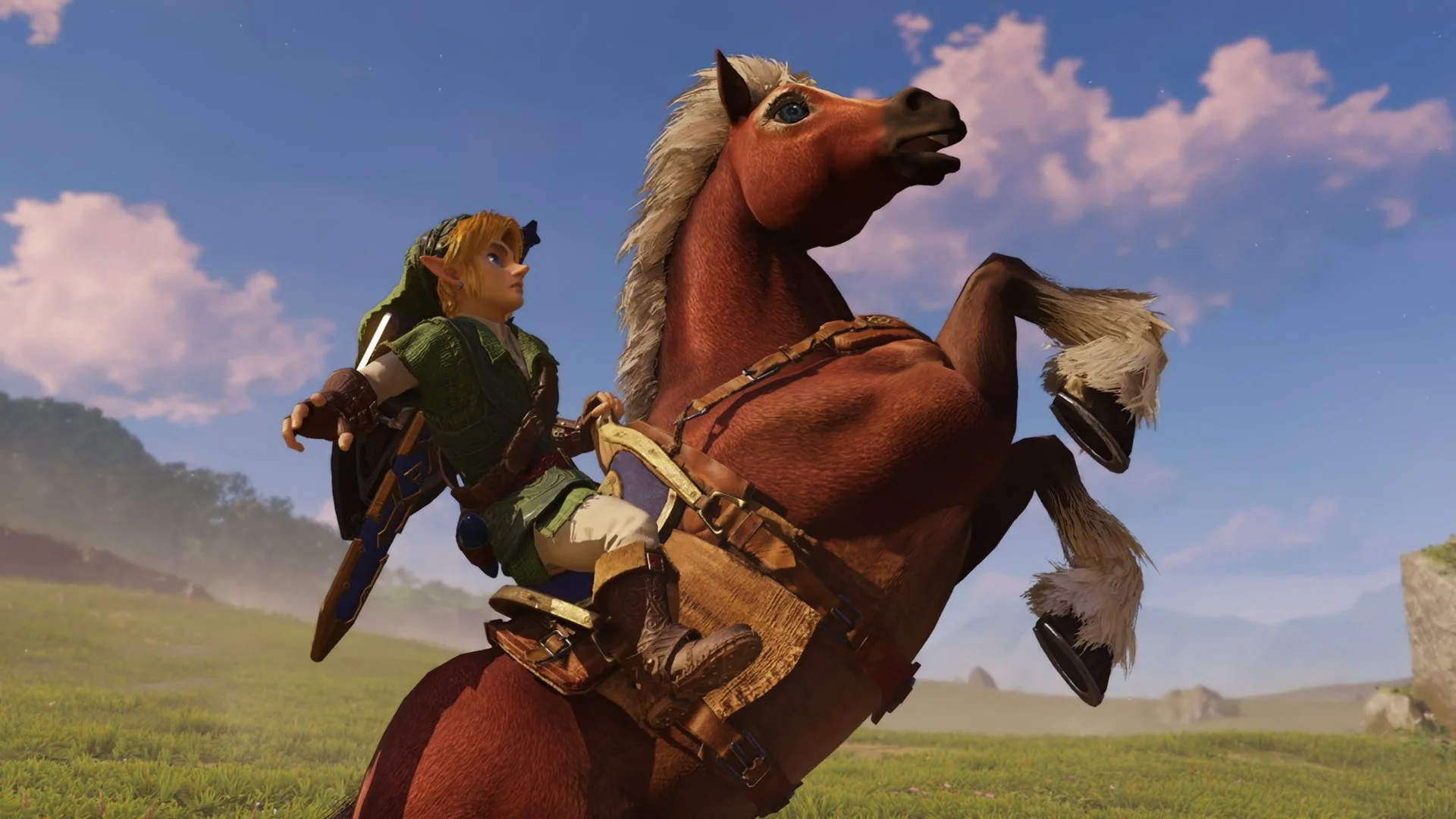
Epona is still the right way to cross Hyrule Field. You just have more ways to get to her. Image: Nintendo
Zelda Notes comes to 1998
Hidemaro Fujibayashi, director of Breath of the Wild and Tears of the Kingdom, showed how Zelda Notes hooks into the remake through the Nintendo Switch App. The Wild-era games already use it for extra lore. Ocarina of Time gets its own set of tools:
- Today’s Record: a daily log of what you did, including enemies defeated.
- Gossip Quest: find a location in the game from a hint photo on your phone, then earn points toward ocarina music scores.
- Play Ocarina: a touchscreen ocarina on your phone, with a guide, autoplay, and scores you can share by QR code.
- Ocarina of Time Quiz: more than 2,000 questions. One free try a day, or spend in-game rupees for extra attempts.
Map, photo studio, play data, and amiibo support are on the same home screen.
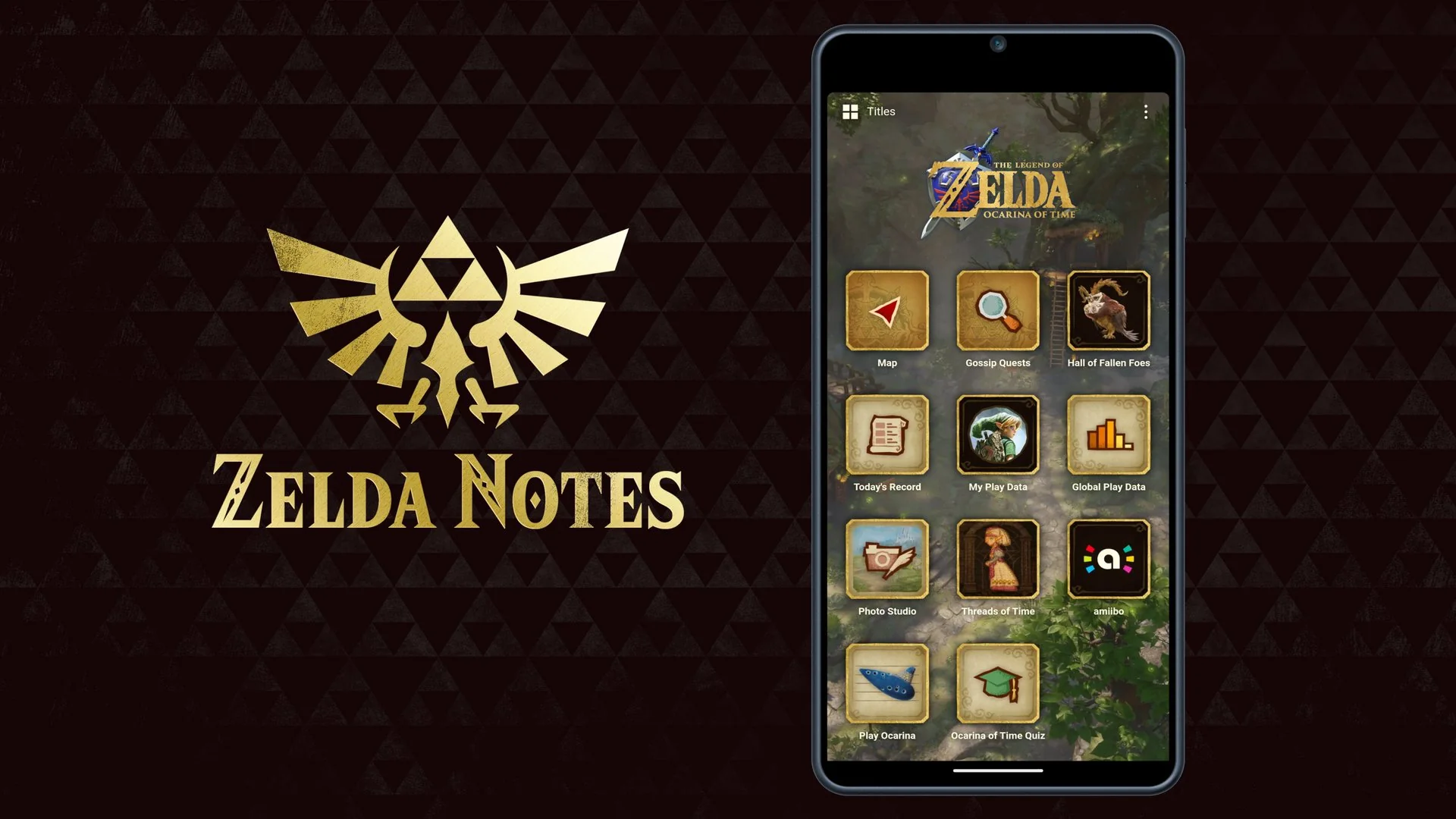
Zelda Notes on the Nintendo Switch App, now with an Ocarina of Time mode. Image: Nintendo
This is optional. The game is complete without a phone. Nintendo is clearly building a second loop for people who want to keep one foot in Hyrule when the Switch 2 is docked.
What they did not change, on purpose
Faithful remakes live or die on this part. Nintendo kept the chest-opening animation. It kept a lot of the original sound design. It kept load transitions into the Deku Tree and Hyrule Field because, Aonuma’s team said, those pauses were part of how the original felt. This is not an open-world reboot. You are not getting Tears of the Kingdom movement in 1998 Hyrule. You are getting the same adventure with the friction sanded down.
Young Link pulling the Master Sword is still the same cut. It just no longer looks like a memory.
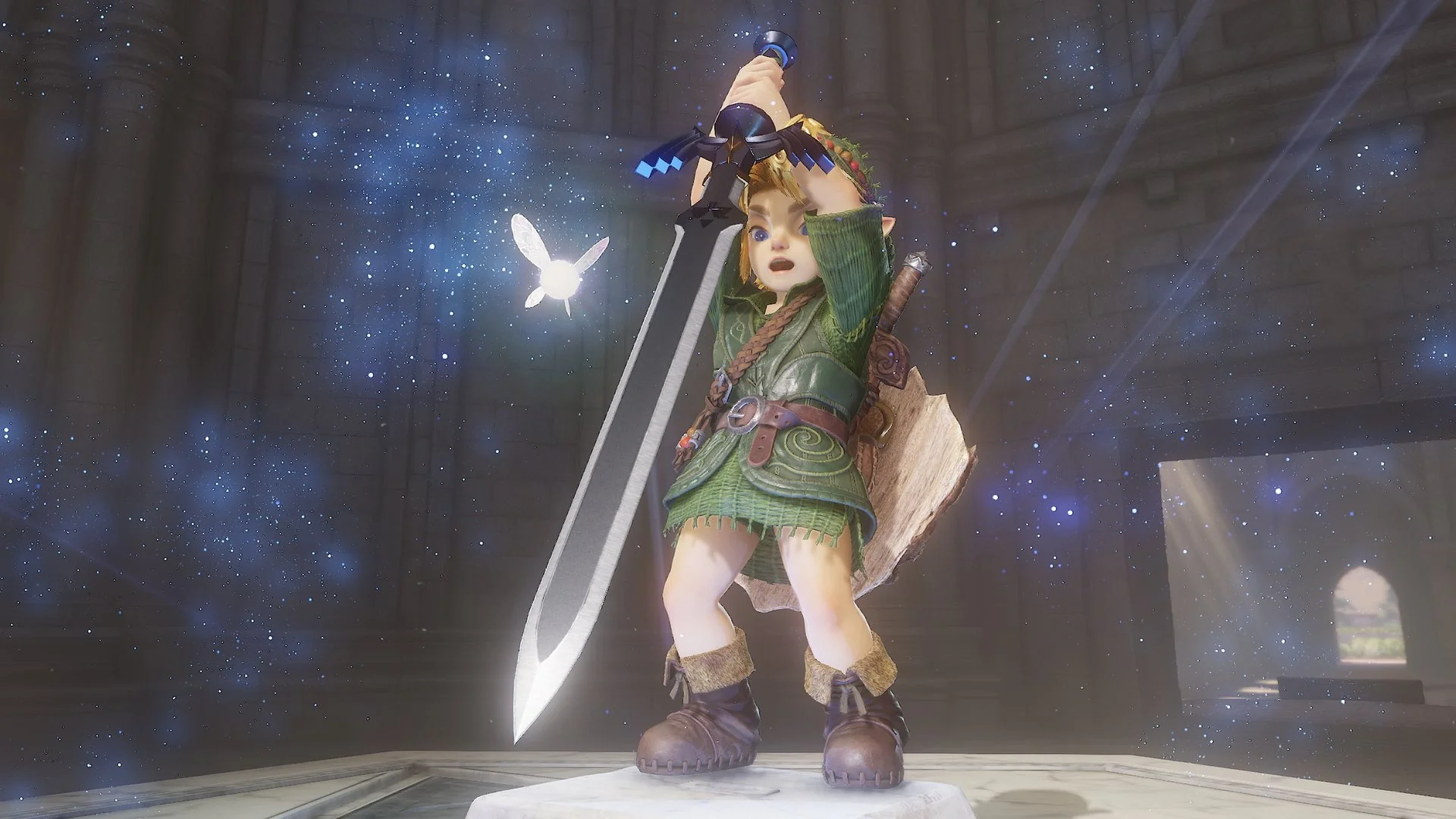
The moment is the same. The movement around it is not. Image: Nintendo
For a lot of people, that is the correct brief. Ocarina of Time did not need a new story. It needed a jump button, a camera that works in town, water you can actually swim in, characters who speak, and a world that keeps its own time. Nintendo showed all of that today.
The Legend of Zelda: Ocarina of Time is out November 5, 2026, Switch 2 exclusive. Digital $59.99, physical $69.99. For the date, box art, and 40th-anniversary hardware, see the Direct recap. For a closer look at the clay-and-craft visual style, see the graphics feature.